


We all know that some mornings can start a little wobbly. Whether a child’s day has begun with stress at home, they’ve arrived feeling sluggish, or they’re anxious about what lies ahead, it can be challenging to have every pupil ready to learn at the same time. Some children simply need a little extra support to help them get into the right frame of mind for learning. This is where Sensory Circuits can help. We’re pleased to let you know that our Sensory Circuits have been updated, so head to your Awesome Stuff and take a look in the SEND folder.
What are Sensory Circuits?
Sensory Circuits are short, structured sessions of physical activities designed to help children regulate their sensory systems so they can be calm, alert, and ready to learn.
The concept was originally developed by Jane Horwood, an occupational therapist, whose work highlighted how movement and sensory input help children to prepare both their bodies and minds for the school day. If you would like to take a further look into this area, please read: Sensory Circuits: A Sensory Motor Skills Programme for Children. LDA Learning, Horwood, J. (2009).
Each circuit usually lasts around 10–15 minutes and follows a three-part sequence:
- Alerting - waking up the body and activating the brain.
- Organising - Developing coordination, sequencing and balance.
- Calming - Settling the body and mind, ready for learning.
This simple, structured approach gives children the sensory input they need, helping them to focus better, move with control, and feel emotionally grounded ready to settle into learning.
Why do we need Sensory Circuits in school?
Many children arrive at school in different states of regulation. Some are bursting with energy; others are flat, anxious, or distracted. A sensory circuit gives every child a chance to ‘reset’ before learning begins.
Benefits include:
- Improved attention and concentration.
- Better emotional regulation and self-awareness.
- Enhanced balance, coordination, and core strength.
- Positive impact on mood and behaviour.
- Greater inclusion for children with SEND or sensory processing needs.
Teachers often notice that pupils settle quicker and stay focused for longer after completing a circuit. Over time, it can become a trusted part of the morning routine or after lunch break, helping all learners to start the next part of their day with confidence and calm.
How do they look in action?
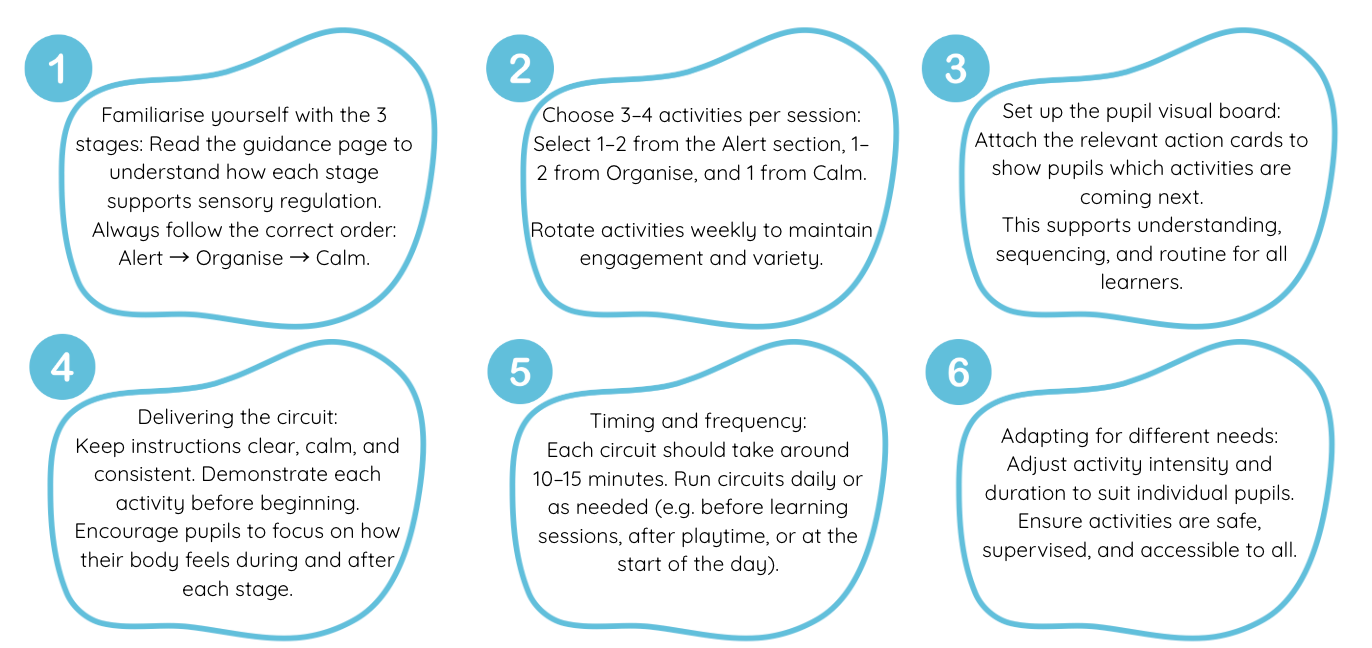
Sensory Circuits will have stations set up (like a fitness circuit). There will be activities for each of the 3 areas: alerting, organising and calming. There can be a couple of different activities set up for each area that will take just 1-2 minutes each. A member of staff oversees, encourages, and models each activity.
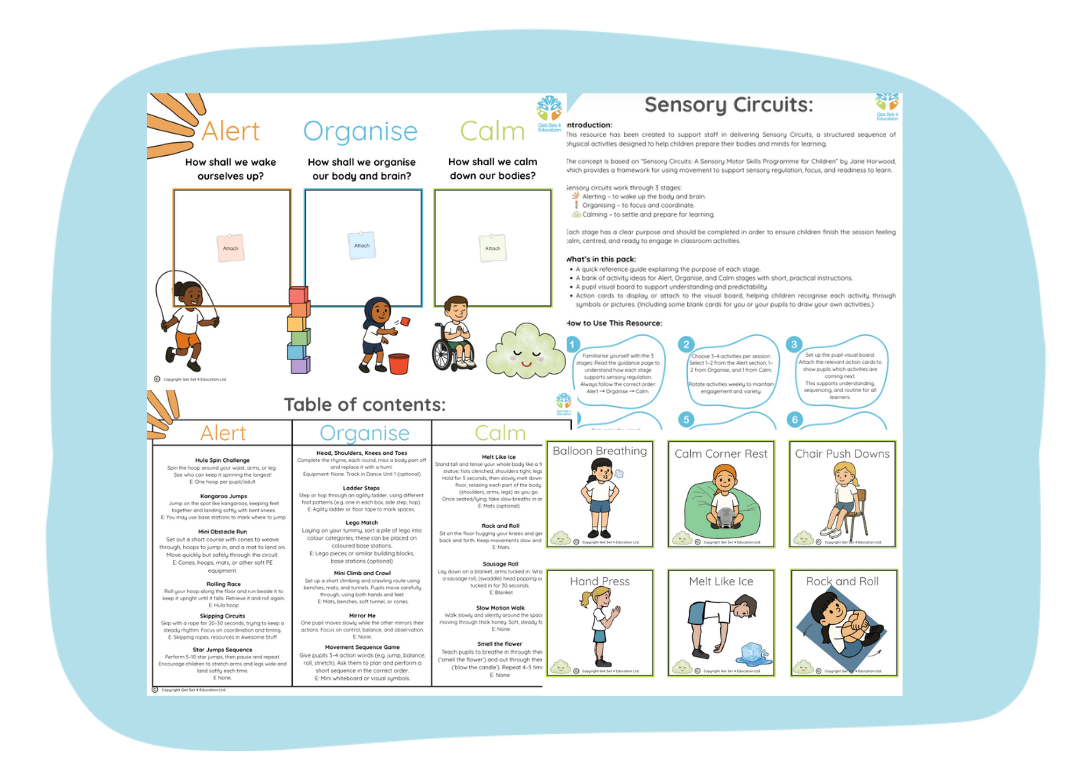
Your Get Set 4 Education Sensory Circuits resource includes:
-
A quick reference guide explaining the purpose of each stage.
-
A bank of activity ideas for Alert, Organise, and Calm stages with short, practical instructions.
-
A pupil visual board to support understanding and predictability.
-
Action cards to display or attach to the visual board, helping children recognise each activity through symbols or pictures. (Including some blank cards for you or your pupils to draw your own activities.)
Getting started – resources and equipment:
You don’t need specialist kit to get going. Many circuits can be created using everyday PE or classroom equipment:
- Cones, hoops, and floor tape
- Beanbags or soft balls
- Balance boards or wobble cushions
- Resistance bands or light weights
- Yoga mats or small tunnels
It’s designed so any member of staff can run a short, purposeful circuit before school or after lunch.
Research and evidence - Sensory Circuits improve learning:
There’s growing research showing that movement and sensory input directly support learning readiness.
- Jane Horwood’s original programme demonstrated improved focus, coordination, and behaviour in children who regularly took part in sensory circuits.
- Studies have shown that short bursts of structured physical activity can boost attention, working memory, and executive function in primary-aged children (Daly-Smith et al., 2023).
- Teachers report better classroom behaviour, reduced anxiety, and a smoother start to lessons when sensory circuits are used consistently.
Sensory circuits help children regulate their sensory systems, which in turn supports their cognitive engagement and emotional wellbeing, the foundation for learning.
What to do next:
If you’re ready to give it a go, visit the SEND folder in Awesome Stuff!
Finally:
Every child deserves to start the day in a state of calm alertness, ready to listen, think, and thrive. Sensory circuits make that possible, combining movement, fun, and purpose in one simple, evidence-based routine.
So take a look in the Awesome Folder, grab your Sensory Circuits resource, and help your pupils get set for success!
We’d love to hear how you’re using sensory circuits in your school. Share your setups, photos (with permissions), or reflections with us on social media using #GetSet4Education or tag us directly.