Getting ready to spring into opportunity:
How this half term can transform your summer clubs.
There’s something about this half term that always feels full of possibility! The evenings are getting lighter. The field is (slowly!) drying out. Children have a little more energy. Staff can finally run a club without needing 14 layers of clothing and a torch!
This is why it’s the perfect time to look ahead to summer term’s extra-curricular provision. Not just to continue with the same clubs as in years gone by, but to think carefully about how we can adapt our upcoming provision to those who haven't accessed it yet.
Who hasn’t accessed clubs yet and why?
This half term before the spring holidays is a brilliant time to pause and ask:
- Which pupils haven’t attended a club this year yet?
- Are certain groups underrepresented?
- Have we unintentionally created barriers?
We know from conversations happening nationally which have come from research such as the ‘Active Lives Survey’, that provision that is offered outside curriculum time isn’t equitable for all pupils. Confidence, cost, transport, previous experiences, and even the word 'sporty' can all become barriers unintentionally. This year's data has shown that 51% of children with no inequality characteristics meet activity guidelines, compared to 39% for those with two or more. (When we talk about inequality characteristics we mean: family affluence, ethnicity, disability and long-term health conditions, gender)
The summer term gives us a fresh window to lessen that gap…
Where to start:
Start with pupil voice. Rather than guessing what children might enjoy after the spring holidays, ask them! A quick few questions could include:
'If you could invent a club, what would it be?'
'What would make you feel more confident to try a club?'
'Would you prefer competitive, relaxed, or just-for-fun sessions?' (Sometimes it isn’t the activity that puts children off, it’s the format.)
You might be surprised by the answers. Your pupil voice questioning doesn’t need to be a formal report, informal chats on the playground are often even more informative! Pupils in their natural, relaxed environment chatting about what ignites their interest is the perfect way to get meaningful feedback from your pupils.
Think beyond traditional sports:
Summer term often defaults to rounders, cricket and athletics. And yes, they are brilliant fun!
But what about including less traditional activities that might grab the attention of your pupils who aren’t currently engaging in traditional sports?
There’s so many to choose from:
- Ultimate frisbee
- Fitness circuits/yoga/dance/cheer with music
- Orienteering challenges
- Multi-skill festival style clubs
- Personal best clubs instead of team selection
- Team building
- Forest school style active challenges.
Non-traditional or less competitive formats can feel safer for children who don’t see themselves as 'sporty.' Summer is the best term to try out new clubs as we have more space by using our fields and outdoor areas, better weather, lighter evenings etc…
Minimising barriers:
One of our favourite examples of minimising barriers is from running a Parent & Child Cricket Club in the summer term.
A relaxed atmosphere, music playing and watermelon slices all round at half time! No pressure, no team sheets, just families playing together.
The impact?
…Children who had previously labelled themselves as 'not sporty' came along because they weren’t walking in alone. They had someone from home with them. The environment felt safe, informal and fun!
This example alone had different school community members joining in; a grandad who hadn’t played cricket since leaving school, a mum who went on to play social cricket and a number of children taking part in All Stars and Dynamos cricket as a result.
Sometimes it’s not about changing the sport. It’s about changing the atmosphere.
Participation increased, especially from those who had never accessed a club before. It was fondly known as the 'Watemelon Club’ which helped reduce the fear of attending a ‘sports club’, taking out the competitive nature, encouraging more pupils (and adults) to get involved in activity.
Take a look at your club offer for summer term and ask:
- Is there a balance between competitive and non-competitive?
- Is there something creative?
- Is there a creative and inclusive name you could title your new sports club?
- Is there something cooperative rather than team-based?
- Is there a leadership or young volunteer opportunity?
Inclusivity isn’t just about inviting everyone. It’s about offering something that feels accessible to everyone.
The Core Enrichment Entitlement - Heads up:
The new core enrichment entitlement has been announced as part of the government’s response to the Curriculum and Assessment Review. The full curriculum, with the enrichment framework, is expected to be implemented for first teaching from September 2028. (So we have a few terms to get ourselves sorted!)
Schools will be expected to ensure that all pupils have access to activities in these five key areas:
- Civic engagement
- Arts and culture
- Nature, outdoor and adventure
- Sport and physical activities
- Life skills
This means headteachers and leaders will need robust documentation of enrichment programmes, pupil engagement and outcomes*, likely supported through school self-evaluation, senior leadership monitoring and evidence used in inspection.
Why summer term Is the perfect time:
The longer days help engagement in extra-curricular clubs. Warmer weather improves mood and motivation for pupils and staff to get involved in sports clubs! Outdoor space in the warm sunshine opens up so many more possibilities.
If there’s one term to target the children who haven’t yet taken part, this is it!
Let’s use this half term to:
- Gather pupil voice,
- Review participation data
- Rethink formats
- Trial something new
- Look ahead to what we could include…
We could enter the summer term not just with clubs, but with opportunity.
A gentle challenge:
Before this term ends, identify one child from each class who hasn’t attended a club this year * and have a conversation… Ask, what would make them come?
It may be deeper than just a bit of music on the playground, watermelon at half time, and a parent by their side, but if we find out the barriers, we can make this summer term one where more children feel like they belong in PE, not just in lessons, but beyond them too.
Now, who’s for a game of rounders…?!
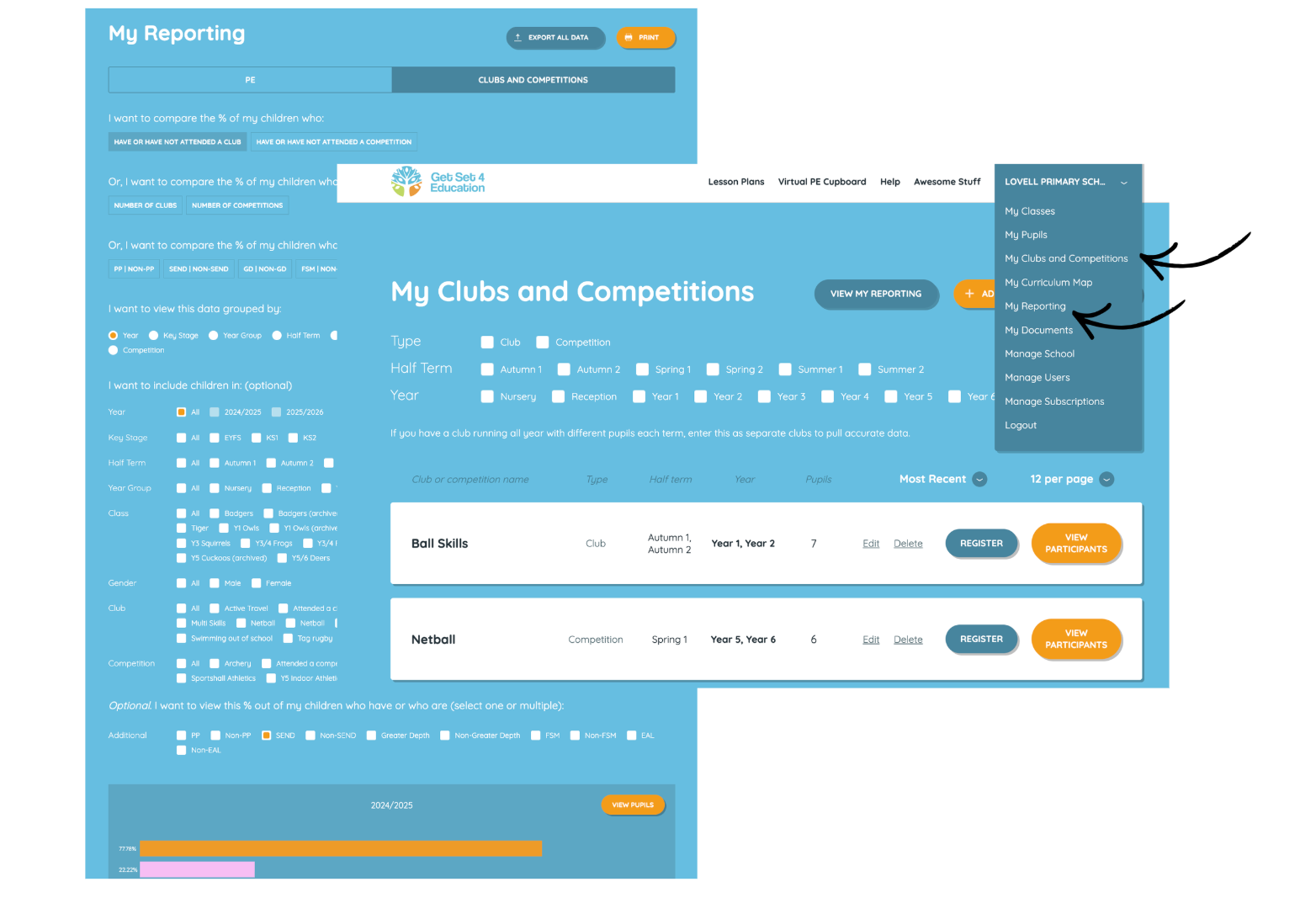
*Don’t forget to use the ‘Clubs and Competitions’ tool to keep track of who is attending your clubs. Using the ‘My Reporting’ feature will allow you to then access data on which pupils need additional support with attending extra curricular provision and also identify any specific groups of pupils that need attention.