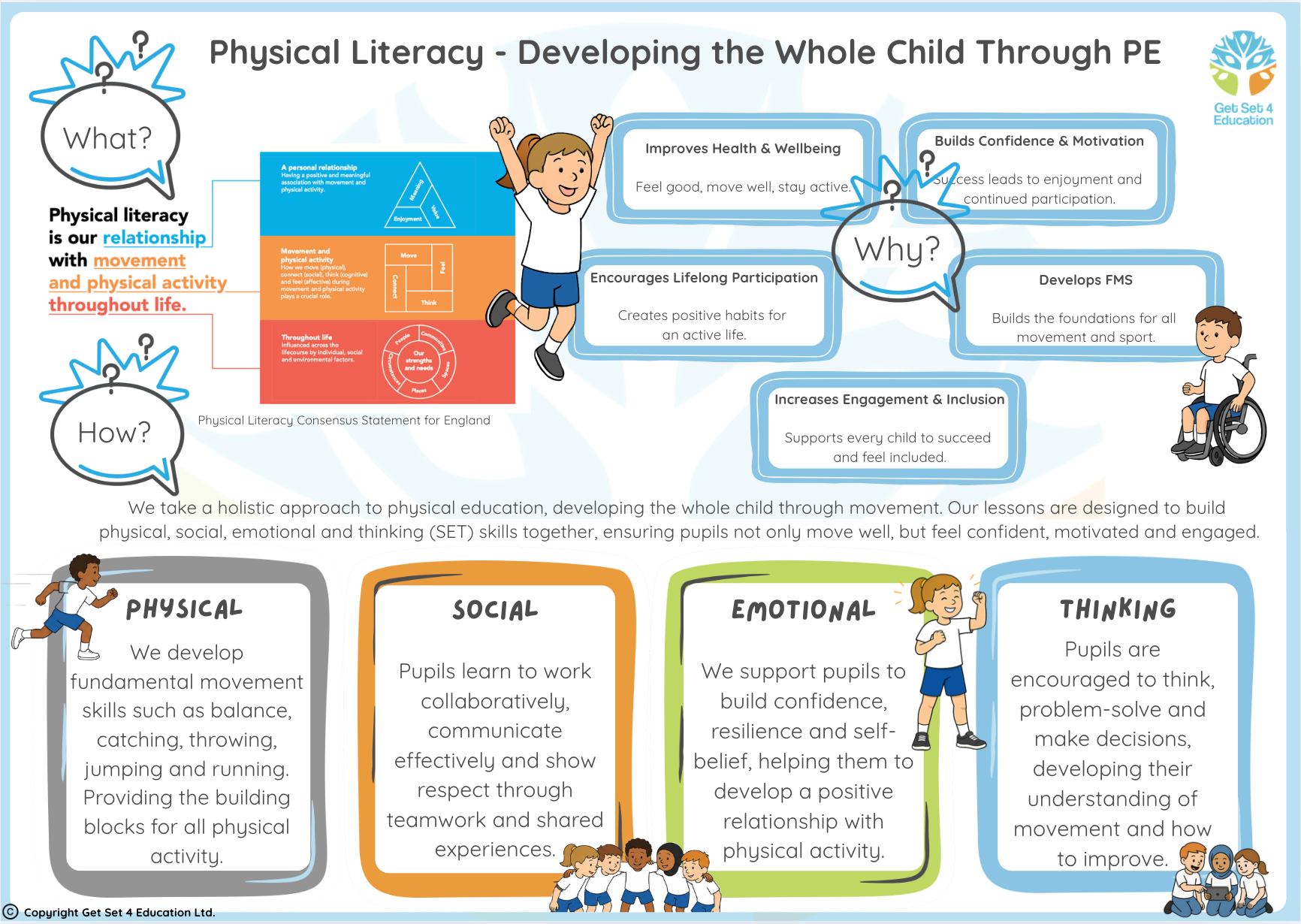
A Holistic Approach - How Get Set 4 PE looks at the Whole Child:
There is often a misconception that PE is simply about developing physical skills or playing sport. While physical development is undeniably important, a truly effective PE curriculum goes much further than this.
Physical Education is about the Whole Child. That means every lesson is designed not only to build physical competence, but also to nurture Social, Emotional and Thinking (SET) skills. This ensures pupils develop their physical literacy in order to enjoy and engage in physical activity for life.
A holistic PE curriculum recognises that physical literacy is made up of more than just movement. It includes:
- Physical competence
- Confidence and motivation
- Knowledge and understanding
- Social and Emotional development
This aligns closely with the definition from the Physical Literacy Consensus Statement for England, which emphasises that children need the skills, confidence and desire to be active for life.
Our platform reflects this through:
- Lessons that integrate Physical, Social, Emotional and Thinking skills
- Assessment criteria inclusive of whole child objectives
- Assessment statements that track progress across all of these areas
- Learning opportunities that build confidence, resilience and independence alongside movement
The importance of embedding SET Skills:
One of the key ways we support a holistic approach is through our SET skills framework.
Every lesson intentionally develops:
- Social skills (e.g. teamwork, communication, leadership)
- Emotional skills (e.g. resilience, confidence, self-belief)
- Thinking skills (e.g. decision-making, problem-solving, reflection)
Head to ‘Awesome Stuff’ to see how we can support you further… from SET skills posters (ideal for sharing language and expectations with pupils) to Year Group Overviews that clearly show where SET skills are developed across every unit.
These tools help ensure that holistic development is not just a buzz word, but something that is visible, planned and attainable.
We’ve recently introduced a physical literacy document designed to help schools understand:
- What physical literacy is
- Why it matters
- How Get Set 4 PE supports its development
-
Looking Ahead to the New National Curriculum:
At the time of writing this, the new PE National Curriculum is being written and all the suggestions point (quite rightly), to a movement-based curriculum.
Get Set 4 PE allows schools to:
- Map learning across units to deepen understanding
- Use a variety of activities as vehicles to develop key National Curriculum strands
- Provide opportunities for depth, consolidation and progression
For example:
Placing similar units (e.g. handball and basketball) alongside each other in your curriculum map allows pupils to:- Revisit and refine key skills
- Develop a deeper understanding of tactics and principles of attack and defence
- Apply learning across different contexts
This ensures learning is progressive, meaningful and inclusive.
Recent publications continue to reinforce the importance of a broader, more inclusive approach to PE.
The Game On: Community and School Sport, written by the Culture, Media and Sport Committee, highlights the need for:
- A wider range of activities (e.g. dance, outdoor learning, non-traditional sports)
- A focus on enjoyment, inclusion and accessibility
- Creating environments where all pupils feel comfortable and successful
We are continuing to:
- Expand our curriculum offering with new and diverse units (including non-traditional activities)
- Design lessons that prioritise inclusion, enjoyment and participation
- Ensure every pupil can find success; regardless of their starting point
Watch this space for new units coming to the platform next academic year!
We will continue to develop Get Set 4 PE and ensure alignment with the new National Curriculum. Providing opportunities for every child to have success, to develop physically literate young people who are confident, capable and motivated to be active for life.