


Can you believe we're nearly at the end of the first half term already?
It's been a busy few weeks! New year groups, new routines, lots of PE lessons and, hopefully, plenty of happy, active pupils.
As half term approaches, you might be starting to think about assessment. How are your pupils getting on? What have they learnt? Who needs a little more support, and who is ready for their next challenge?
And, perhaps most importantly, how can you make these judgements without adding another big job to your already busy workload?
The good news is that PE assessment doesn't need to be complicated or time-consuming. In fact, you've probably been gathering valuable information about your pupils throughout the half term without even realising it!
Let's explore a few simple ways to recognise progress, make confident assessment judgements and use the tools available to make life that little bit easier.
Looking beyond physical performance
When we think about assessing PE, it's natural to focus on physical skills. Can a pupil throw accurately, balance with control or perform a sequence of movements?
Of course, these are important. But what about the pupil who confidently leads their group during an Outdoor Adventurous Activities (OAA) challenge? Or the child who perseveres with a difficult gymnastics skill, despite finding it challenging? What about the pupil who spots a tactical opportunity and helps their team make a better decision?
These are all valuable examples of learning.
Get Set 4 PE recognises progress across four areas of learning:
- Physical: Developing movement skills, control, coordination and competence.
- Social: Communicating, collaborating, supporting others and demonstrating leadership.
- Emotional: Showing perseverance, confidence, determination and the ability to manage emotions.
- Thinking: Making decisions, solving problems, evaluating performance and applying knowledge.
By considering all four, we can build a richer picture of each pupil's strengths, progress and areas for development.
Assessment doesn't have to mean assessing everything!
One of the biggest challenges for teachers is finding the time to assess while still delivering engaging, active lessons.
The key is to keep assessment purposeful and manageable.
Think about what you've already observed during a unit. Which pupils are demonstrating the expected skills and knowledge? Who needs more opportunities to practise? Who is consistently applying their learning with confidence and independence?
You don't need to make a note of every achievement in every lesson.
Get Set 4 PE's assessment tool allows teachers to record whether pupils are working towards, working within or working beyond the expected level.
But sometimes a single judgement doesn't tell the whole story.
For example, a pupil may be working towards the expected physical outcomes in a games unit but demonstrate excellent communication, leadership and problem-solving skills. And this should absolutely be recognised!
Teachers can use the one-page pupil profiles, accessed by clicking on a pupil's name within the assessment table, to record additional observations and celebrate individual strengths.
A quick note about a pupil's leadership, perseverance or ability to support others can provide valuable context alongside their overall assessment.
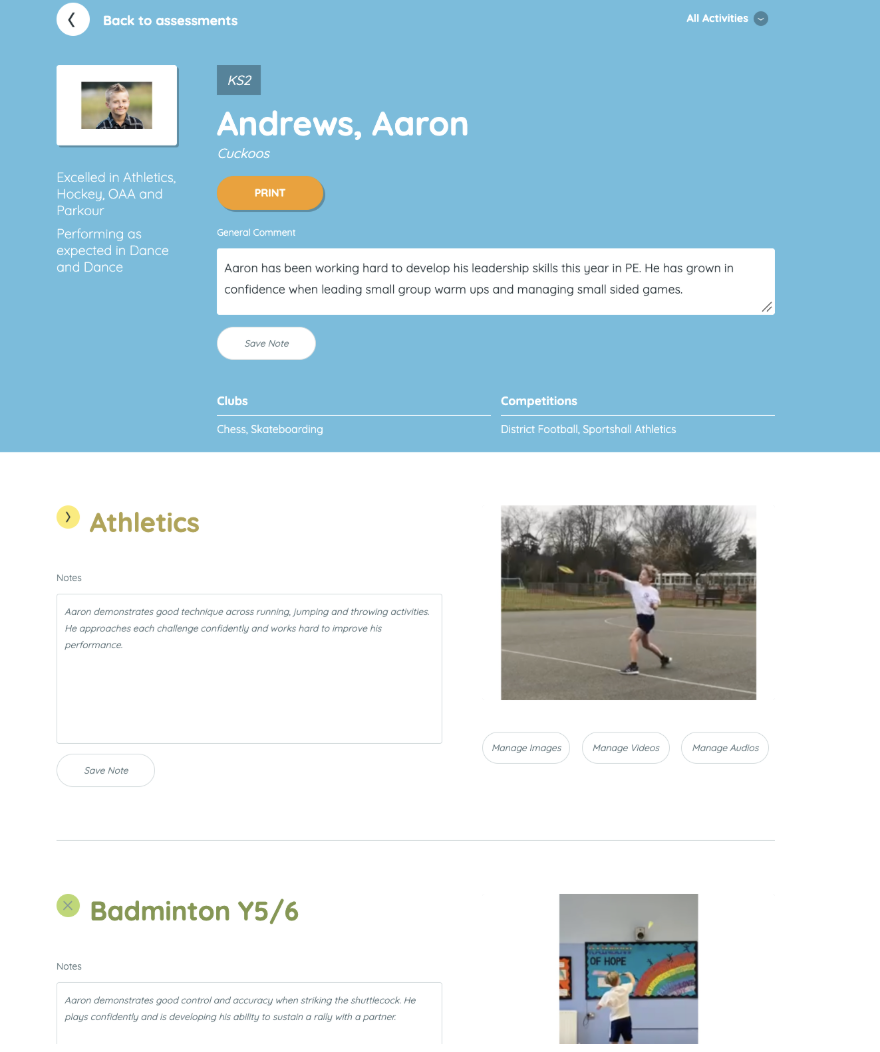
One page profile.
What does working beyond actually look like?
This is a question we're often asked.
Working beyond doesn't necessarily mean being the fastest runner, the strongest thrower or the most talented footballer.
It also doesn't simply mean teaching a pupil skills intended for an older year group. Instead, think about how confidently, consistently and independently a pupil can apply their learning.
For example, a pupil demonstrating greater depth might:
- Perform skills with a high level of control, accuracy and consistency.
- Make effective tactical decisions and adapt their approach to changing situations.
- Transfer skills and knowledge between different activities.
- Independently evaluate performance and offer constructive feedback.
- Demonstrate creativity and problem-solving when developing sequences or strategies.
- Show strong leadership, communication and collaboration skills.
It's important to remember that greater depth can look different across activities and between pupils.
A pupil might demonstrate advanced physical skills in athletics, another might show their greatest strengths in leadership and decision-making during OAA.
The important thing is recognising what pupils can do, how they apply their learning and what they are ready to explore next.
When making an overall assessment judgement, teachers should still consider the intended learning outcomes and expectations for that unit. Strength in one area doesn't automatically mean a pupil is working beyond across the whole unit.
A little extra help when you need it
Sometimes it's useful to have something more specific to refer to, particularly when deciding whether a pupil is working towards, within or beyond expectations.
Our Skills and Knowledge Checks have been designed to support teachers with this.
They focus on five fundamental movement skills that underpin learning across many PE units: balance, run, jump, throw and catch.
For each year group, the resources provide:
- The units in which the skill is developed.
- Simple activities to check what pupils can demonstrate.
- Key teaching points to look for.
- Questions to check pupils' understanding.
- Examples of what pupils may already know and be able to do.
- Suggestions of what greater depth might look like.
These checks can help teachers recognise progress, identify gaps in learning and decide what support or challenge pupils might benefit from next.
You'll find them in Awesome Stuff → Progression Documents → Skills and Knowledge Checks.

Skills and Knowledge Checks
Before you head off for half term...
Assessment should help us understand our pupils and support their next steps, not generate more paperwork.
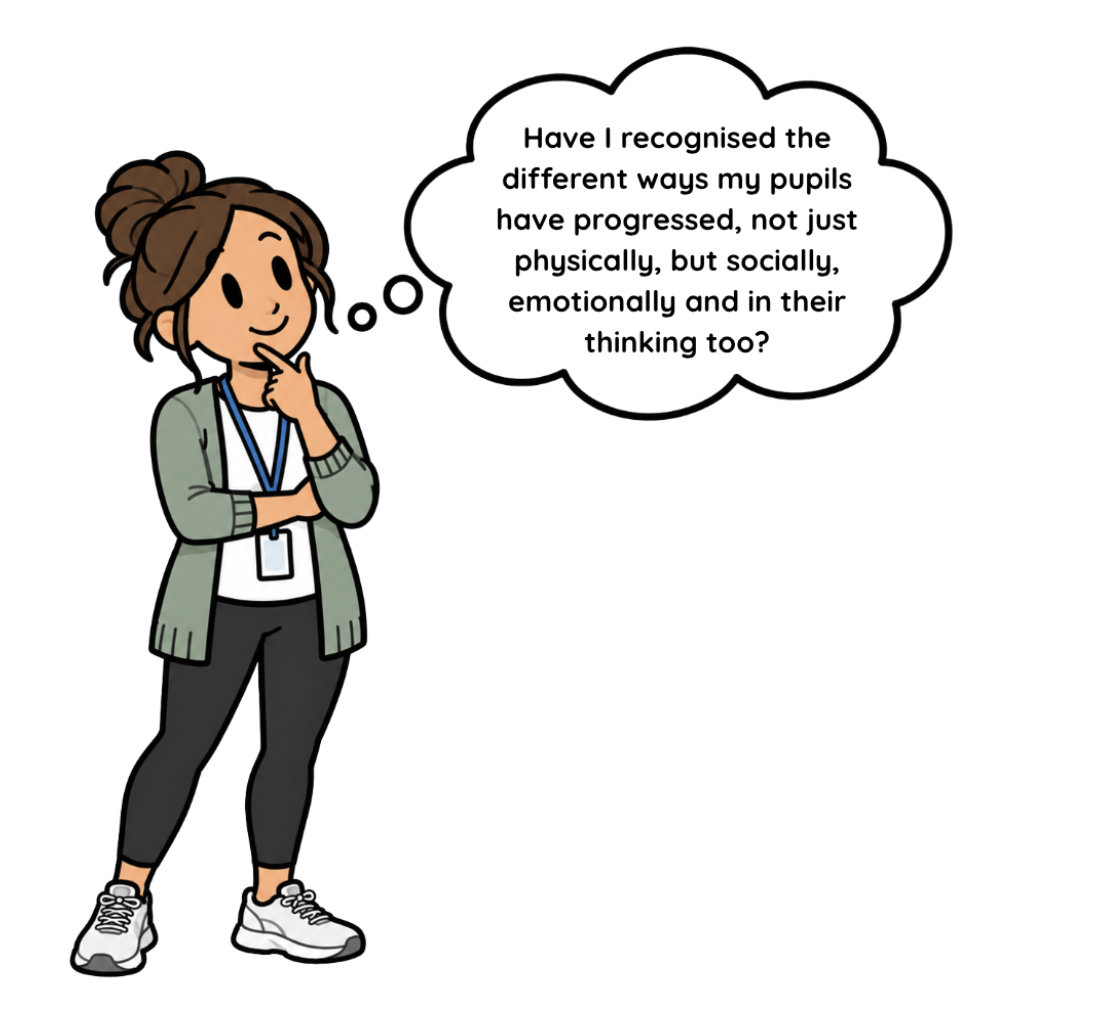
As you reflect on the first half term, perhaps ask yourself:
A pupil who has found the confidence to join in, persevered with a difficult challenge or become a supportive team member has achieved something worth celebrating.
Keep assessment simple, use the tools available and remember that you don't need to record everything to recognise meaningful progress.
Need a little support with assessment?
Explore the assessment tools and Skills and Knowledge Checks on Get Set 4 PE, or get in touch with our friendly team. We're always happy to help!
And most importantly, enjoy a well-earned half-term break!